Start with what you can actually see: a nine-year-old Labrador mix who takes the stairs one at a time now, pausing at the landing, versus a nine-year-old Chihuahua mix who still beats the mail carrier to the door every afternoon. Same age in years. Very different bodies. If you are trying to decide when to start senior-level care conversations for your own dog, do not start with a birthday. Start with size.
Do this first: sort by weight class, not by age. Small and toy breeds, generally under 20 pounds, are usually not considered senior until around 10 years old. Medium breeds cross that line closer to 9. Large breeds, think Labradors and German Shepherds, are typically senior by 7. Giant breeds, Great Danes and Mastiffs among them, can be geriatric by 8. This is the framework AAHA uses in its senior care guidelines, and it is the one I default to before I even look at a specific dog’s history.
Why size changes the senior timeline at all
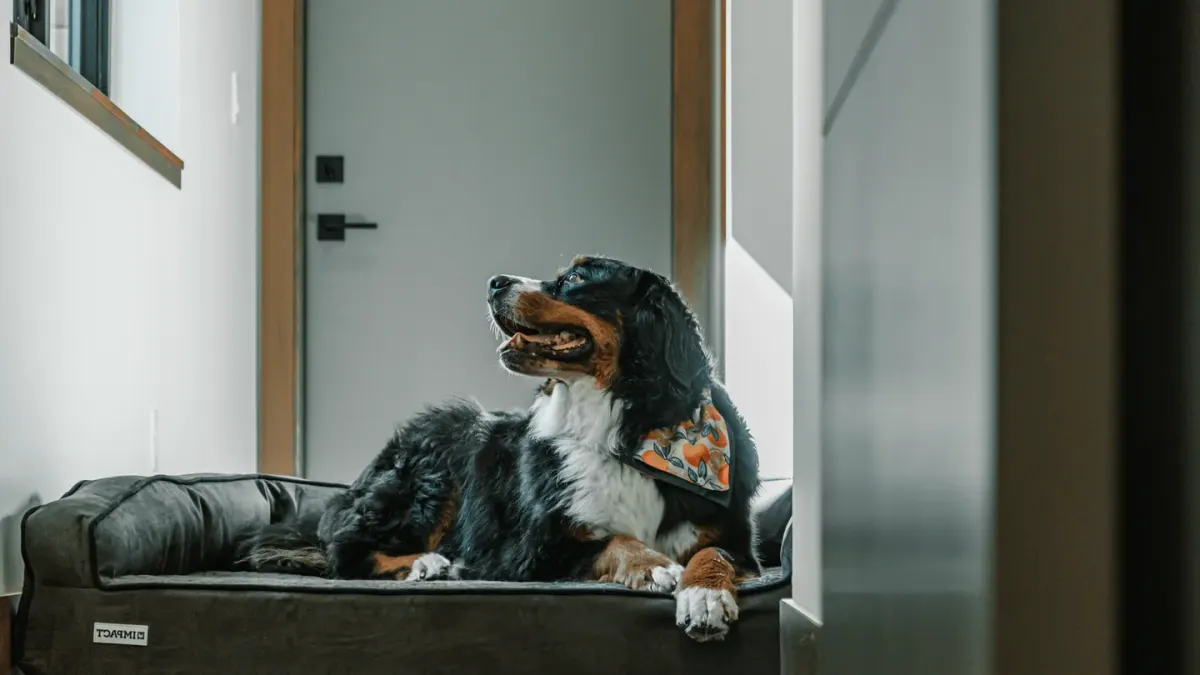
I’ve watched this play out dozens of times with clients who own dogs at both ends of the size spectrum. One family I worked with had a 7-year-old Bernese Mountain Dog named Otto, about 95 pounds, alongside a 7-year-old Papillon named Biscuit, maybe 8 pounds, both adopted the same year from the same litter of circumstances (different breeders, same household). By the time Otto was slowing down on cold mornings, needing a beat longer to get up off the kitchen floor and showing a slight stiffness after his evening walk, Biscuit was still doing his post-dinner zoomies around the coffee table without missing a step. The owners kept asking me if something was “wrong” with Otto. Nothing was wrong. Otto was simply further along his own aging curve than Biscuit was on his, even though the two dogs had lived through the identical number of winters.
The size-lifespan gap is real and well documented. According to AKC, giant breeds like Great Danes and Mastiffs often live only 7 to 8 years on average, while small breeds like Chihuahuas, Miniature Poodles, and Yorkshire Terriers commonly live past 12. Researchers point to a few converging factors: smaller dogs tend to have a higher mass-specific metabolic rate and slower cellular growth, while larger dogs grow fast, which appears to trade off against long-term cellular repair and cancer defenses. None of this is exotic biology you need to memorize. It just means the seven-year mark matters more for a mastiff than it does for a mini poodle.
I do want to name the counterargument, because I hear it constantly from thoughtful owners: “Isn’t chronological age still useful? Shouldn’t I just watch for symptoms instead of worrying about a size chart?” It’s a fair point, and symptom-watching absolutely matters more than any chart. But here is why I still lean on the size-adjusted timeline first: if you wait for obvious symptoms in a large or giant breed, you are often already behind. Their aging-related changes, joint wear, subtle organ shifts, arrive on a compressed schedule, and early senior-level bloodwork and joint support give you a head start rather than a scramble. For small breeds, the opposite risk shows up: owners sometimes dismiss real changes as “she’s just small and slow” well past the point where a senior workup was warranted.
What I actually watch for in each dog, regardless of breed size
I don’t treat “senior” as a single dramatic switch that flips on a dog’s seventh or tenth birthday. I think of aging as information gathered over time, not a diagnosis handed down in one visit. A slower walk to the water bowl this month, a little more hesitation at the top of the stairs next month, a coat that’s lost some shine by spring; each observation is a data point, not a verdict. That reframing changes how families talk to me, too. Instead of asking “is my dog old now?” they start telling me what changed and when, which is exactly the information I need.

Regardless of size, here’s the short list of home-observable changes I ask every family to track once their dog crosses into that size-adjusted senior window:
- Slower or more hesitant stairs, or reluctance to jump onto furniture they used to hop onto easily
- A change in how long it takes to get up after resting, especially on hard floors
- Changes in coat quality, shedding pattern, or skin texture
- Shifts in appetite, thirst, or stool consistency that last more than a couple of days
- Any new stiffness after rest that loosens up once they’re moving (“morning stiffness”)
- Changes in sleep pattern, especially more daytime sleeping or restlessness at night
None of these signs alone means disease. All of them are worth writing down and bringing to your veterinarian, because a pattern across weeks tells a very different story than any single afternoon does.
Nutritionally, this is also where ingredient-level support gets discussed, and it’s worth being precise about what the evidence actually says rather than what marketing implies. Nicotinamide riboside is a NAD+ precursor studied for supporting normal cellular function, which matters most in dogs whose cells are already under more replicative stress, typically the larger, faster-aging breeds. Quercetin is a flavonoid with antioxidant properties that has been studied for immune and cellular support, and resveratrol is another antioxidant explored for cellular health and vitality. I mention these because owners ask, not because any one ingredient replaces a senior wellness exam or bloodwork; the exam is still what tells you whether stiffness is early arthritis or something else entirely.
For dogs already showing early gait or cognitive changes, it’s also worth reading What Shorter Front-Leg Steps May Tell Us About Cognitive Change in Senior Dogs, which walks through one of the more subtle signs owners tend to miss.
Where I land, and what I’d tell you if you were in my exam room
If I had to give one piece of advice to a family with a large or giant breed dog turning 6 or 7: do not wait for obvious symptoms before starting senior-level bloodwork and joint monitoring. The compressed aging timeline in big dogs means the window between “looks fine” and “needs intervention” is genuinely shorter than it is for a toy breed. For small-breed owners, my advice runs the other way: don’t assume your 11-year-old Yorkie is too small to need the same senior workup just because she still acts like a puppy at the dog park. Small dogs get arthritis, kidney changes, and cognitive decline too; they just tend to arrive later on the calendar.
I think about a client’s 12-year-old Cavalier King Charles Spaniel, a breed prone to heart issues regardless of size, who came in for what the owner described as “just being a little slower on our evening walk around the block.” That single observation, brought in early rather than dismissed as normal aging, led to a conversation that changed how closely we monitored her from that point forward. I’m not going to claim that visit predicted or prevented anything specific; one dog’s case is one case, not evidence of a general outcome. But it’s exactly the kind of small, recognizable change I want every owner reading this to feel comfortable bringing up, whether their dog is 6 pounds or 160.
Bottom line: use size to set your senior-care calendar, then use observable changes, not age alone, to decide when to act. A large or giant breed dog deserves that first senior conversation around 6 to 7 years old; a small or toy breed dog can usually wait until 9 or 10. Either way, the changes you notice at home, the stairs, the stiffness, the coat, the appetite, are what actually tell you when it’s time to talk to your vet, not the number of birthdays on the calendar.